
Arindum Soni, Saarthi IAS
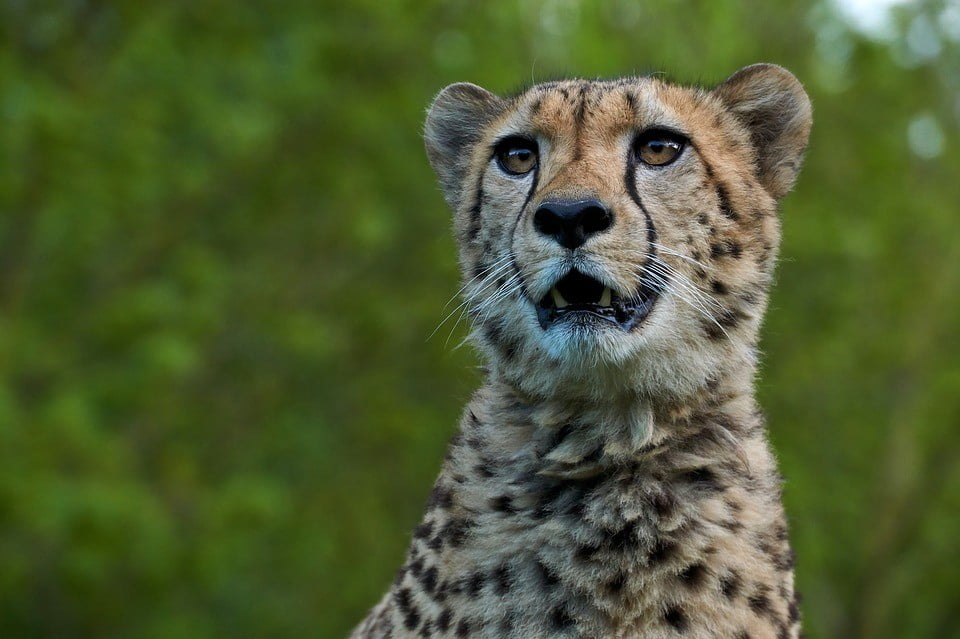
The Cheetah’s return
- In modern times, human impacts are primarily responsible for species extinctions and biodiversity loss.
- In India’s context, The cheetah, the only large carnivore made extinct in independent India by human actions, was reintroduced by Indian government in September 2022, reinforcing the government’s commitment to conserving our natural heritage.
Cheetah’s importance for the ecosystem
- The cheetah served as an evolutionary force and was responsible for the fast speed of the blackbuck, its major prey.
- Unlike tigers, leopards and lions — ambush predators — the cheetah hunts by chasing its prey and thereby removes the sick, old, as well as young from the population, ensuring the survival of the fittest and keeping the prey population healthy.
- A top carnivore at the apex of the food chain can sustain its population when lower trophic levels are functioning optimally.
- This is the philosophy of Project Tiger, which uses the tiger as a flagship to garner resources for conserving intact ecosystems.
- Several ecosystems in India do not have tigers; cheetahs could serve as a flagship for conservation there.
Successful reintroductions require long-term commitments
- Successful reintroductions require long-term commitments in several areas.
- Re-wilding ecosystems requires a reduction in biotic pressures by incentivized voluntary relocation of communities, as has been done in tiger reserves.
- Resources required for these need to be committed to a minimum of three to five sites for the long term (25-30 years).
- As, India does not have Africa’s vast wilderness with low human densities.
- However, within the historic range of the cheetah, India approximately one lakh square km under protected areas (PAs).
- However, Individual PAs by themselves are not big enough to sustain a viable cheetah population in the long term.
- Therefore, conservation practitioners need to be innovative and manage cheetahs from these sites as a metapopulation artificially moving animals between them to mimic natural dispersal for demographic and genetic viability.
- Once cheetahs build up a population, they will disperse naturally to colonise larger human-dominated landscapes and may potentially exchange individuals between some of the conservation sites naturally.
Conservation effort
- As, conservation efforts lead to relocation of forest dwelling communities, incentives are given to local communities by government to relocate them.
- It is a win-win situation for the local people and biodiversity conservation, and an opportunity for governments to earn peoples’ goodwill.
- Given an opportunity, most forest communities prefer to join mainstream society that gives them access to markets, roads, electricity, hospitals, jobs, and education.
- Community-based ecotourism, sharing of gate receipts with buffer zone villages, and an increase in real estate with the arrival of biodiversity are some direct economic benefits to local people if schemes are implemented prudently and equitably
- Along with, A scheme to compensate for livestock predation that is transparent needs to be implemented.
- If people benefit economically from having cheetahs in their neighbourhood like people in Saurashtra benefit from lions, they are likely to be more tolerant towards the animals.
Challenges related to introduction of Cheetah in Kuno National Park
- As Southern Africa, from where the cheetahs have been brought, currently has a cold dry winter in response the animals developed a winter coat.
- Therefore, their physiological cycle is still tuned to the photoperiod of Southern latitudes.
- In Kuno, they experienced a hot and humid climate — their winter fur accumulated moisture and the radio collars aggravated the condition making their skin itchy and delicate.
- Scratching resulted in wounds that were infected by maggots.
- Unfortunately, the inexperience of the field staff did not allow detection of the infection in time which could have led to an easy cure.
- Given time, the Southern African cheetahs are likely to adapt to the Indian photoperiod and change their biorhythms to time their coat with Indian winters.
Cheetah
- Originates from Sanskrit and means ‘the spotted one’.
- Fastest land animal in the world.
- Found in the majority of Sub-Saharan Africa and extends eastward to India.
- The only large carnivore that became “extinct” in India as a result of excessive hunting and the destruction of its natural habitat.
- The last known cheetah passed away in the Koriya district of what is now Chhattisgarh in the year 1947, and the species was officially recognized as extinct in the following year, in 1952.
- In accordance with the “Action Plan for Reintroduction of Cheetah in India” developed by the Wildlife Institute of India (WII), an initial founder stock of fifty wild cheetahs that are suitable for establishing a new cheetah population would be brought into India over the course of the first five years.
- The Prime Minister of India was responsible for releasing the first group of eight cheetahs, all of which originated in Namibia and were placed in a quarantine enclosure at Kuno. There were five females and three males among the group.
- The existing bomas, which are enclosures for wild animals that are frequently built for the purpose of animal treatment or quarantine, have undergone some alterations.
Conclusion
- The release of the first inter-continentally translocated cheetahs, gave the project the required prestige.
- Metapopulation management along with economic benefits to communities is the only way to reestablish Cheetahs in India.
- The reintroduction project is much required for the ecological security of India.
- Therefore, threatened species of the savanna and deciduous forests — wolves, caracal, blackbuck, bustards, four-horned antelopes and chinkara — would benefit from the investments in bringing back the cheetah.
The Cheetah’s return
 BJP Makes Gains in Rajasthan Civic Polls as CM Bhajanlal Sharma’s Election Strategy Draws Praise
 Keeping the UCC debate alive
 Ethanol debate over sustainability