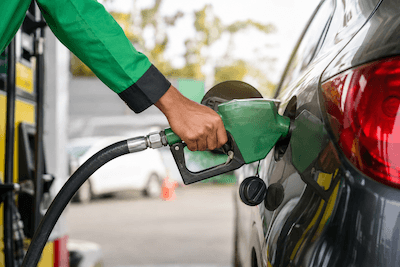
India’s decision to blend ethanol with petrol, to reduce crude oil imports and to provide additional income to farmers, is being hailed as one of the country’s biggest energy reforms in decades. But the programme has raised serious concerns over vehicle performance, and costs on consumers and resources, agricultural and natural. Government hopes to cut its import bill by blending 20% ethanol with petrol, commonly known as E20, but experts are saying if India will actually save after factoring in the costs mentioned above.
India imports nearly 85% of its crude oil requirement, and remains vulnerable to international price variations often caused by geopolitical conflicts. Replacing a portion of petrol with domestically produced ethanol can certainly reduce dependence on imported petroleum. The move is also aimed at reducing carbon emissions, improving energy security and providing additional income to farmers, especially those producing sugarcane from which ethanol is made. The policy appears to be a win-win on paper, but is it so?
People do not buy fuel because it contains ethanol or petrol. They buy fuel to travel kilometres. Suppose a car travelled 15 kilometres on one litre of petrol before E20 became the standard fuel. Now imagine that, in actual usage, the same vehicle delivers lower mileage after switching to E20. Some motorists have reported noticeable drops in fuel economy, although controlled testing by automobile manufacturers and government agencies generally indicates much smaller reductions for E20-compatible vehicles. The extent of any mileage change depends on the vehicle, engine calibration, driving conditions and maintenance.
If a vehicle requires more litres of E20 to cover the same distance, each litre contains 20% ethanol but also 80% petrol. Whether the country achieves substantial petroleum savings depends on the balance between the increased volume of fuel consumed and the reduced petrol content in each litre. This is precisely why India needs transparent, independent studies measuring real-world petroleum savings, rather than relying solely on ethanol blending percentages.
For policymakers, the focus is reducing crude imports. For consumers, the calculation is much simpler. They look at one number: how much does it cost to travel one kilometre? If motorists have to buy more litres of fuel to cover the same distance, their monthly fuel expenditure may rise, even if the national import bill declines. For commercial drivers—taxis, delivery vehicles, transport operators and daily commuters—even a modest reduction in fuel economy can translate into thousands of rupees over a year. For this reason, many motorists continue to question whether they are paying more for the same journey.
Fuel economy is only one part of the discussion. Another concern is long-term maintenance. Ethanol behaves differently from petrol. It absorbs moisture more readily and has different solvent properties. Modern vehicles designed specifically for E20 are engineered to accommodate these characteristics. However, owners of older vehicles and those not originally designed for higher ethanol blends remain concerned about the long-term effects on fuel-system components such as rubber seals, plastic parts, fuel lines and injectors. Manufacturers have progressively introduced E20-compatible vehicles, but India’s roads still carry millions of older cars and two-wheelers. If maintenance costs increase or vehicle life is reduced, those costs become part of the overall economics of ethanol blending for consumers.
Perhaps the biggest environmental question surrounding ethanol has little to do with vehicles; it is about water. A significant portion of India’s ethanol is produced from sugarcane, which is one of the most water-intensive crops. Producing sugarcane requires substantial irrigation, particularly in states such as Maharashtra and Karnataka, where groundwater resources are already under stress. By the ethanol-blending policy, India may reduce its dependence on imported crude oil, but it could simultaneously increase pressure on scarce freshwater resources. The issue is not merely the water used in ethanol distilleries. The much larger concern is the water required to grow the feedstock itself. Therefore, one is forced to ask this: Are we replacing dependence on imported oil with greater dependence on groundwater?
The government has acknowledged this challenge by encouraging second-generation (2G) ethanol, produced from agricultural residues such as rice straw, crop waste and bagasse. These feedstocks do not require additional agricultural land or irrigation and are considered a more sustainable long-term solution. However, 2G ethanol currently accounts for only a small share of India’s ethanol production.
Another debate centres on agriculture. India uses sugarcane, maize and certain surplus food grains for ethanol production under defined policy conditions. While the government maintains that food security will not be compromised, critics caution that greater diversion of agricultural resources towards fuel could affect crop availability and prices during years of poor harvest. Balancing energy security with food security will therefore remain a continuing policy challenge.
Countries such as Brazil have developed extensive flex-fuel ecosystems where motorists can choose between petrol and different ethanol blends depending on prices and vehicle compatibility. India is moving in that direction through flex-fuel vehicle policies, but for now, E20 is steadily becoming the default petrol available at retail outlets. This raises another important question: Should motorists be offered different fuel options based on their vehicle’s compatibility and fuel economy, or should a uniform national blend become the standard? The answer will influence both consumer confidence and future adoption.
There is little disagreement that India needs to reduce its dependence on imported oil. There is also little doubt that cleaner fuels will play an important role in the country’s energy future. The debate is not about whether ethanol is good or bad. The debate is about ensuring that public policy is evaluated on complete evidence rather than a single metric.
A successful energy transition should measure:
- Reduction in crude oil imports
- Actual petroleum saved after real-world fuel consumption
- Cost per kilometre for consumers
- Vehicle maintenance and longevity
- Water consumption in ethanol production
- Impact on agriculture and food security
- Overall environmental benefits
However, we must reckon that no fuel is without compromise. Petrol contributes to air pollution and import dependence. Electric vehicles raise concerns over battery production, recycling and mineral sourcing. Biofuels reduce petroleum use but require land, water and agricultural resources. India’s ethanol programme should therefore be viewed neither as a miracle solution nor as a policy failure. It is an evolving strategy that deserves continuous evaluation. Ultimately, the measure of success should not simply be how much ethanol is blended into petrol, but whether India can genuinely reduce petroleum dependence without imposing disproportionate costs on consumers, agriculture or natural resources. Energy security is a national priority. But the most successful energy policies are those in which the nation benefits and the citizen feels the benefit too.