Rajasthan’s global appeal extends far beyond its forts, palaces, and sweeping desert landscapes. At its core lies a vibrant, living folk culture, rich in music, dance, and tradition that transcends borders and languages. For some, its allure is so powerful that it reshapes identity itself.
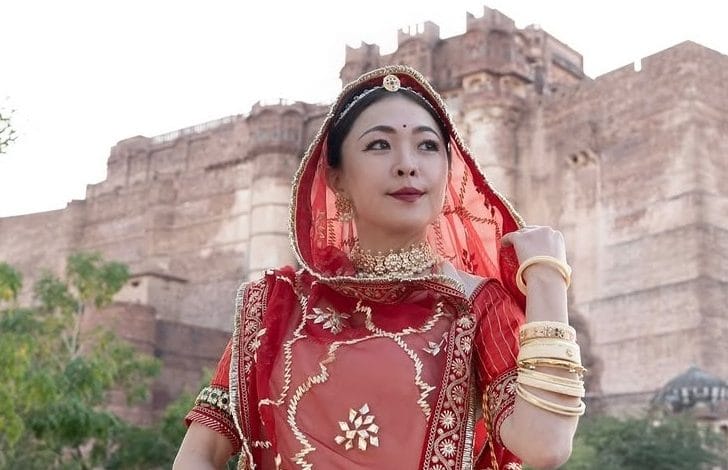
In Japan, that transformation is embodied by a woman once known as Mayumi, now widely recognized as Rajasthani Madhu.
Her story is not merely one of artistic admiration but of deep cultural immersion. Over the years, her dedication has earned recognition from Rajasthan’s tourism authorities, who have invited her to participate in state fairs and festivals, an acknowledgment of her role as an informal cultural ambassador carrying Rajasthan’s spirit across continents.
Standing amidst the vibrant Gangaur processions in Jaipur, surrounded by swirling leheriya fabrics and echoing folk melodies, Madhu often reflects on the moment that changed her life. Years ago, in a Tokyo cinema hall, a glimpse of Rajasthan in an Indian film sparked a fascination that would grow into a lifelong journey.
A passionate admirer of Indian cinema, she credits films and stars like Hrithik Roshan and Alia Bhatt for opening her eyes to a culture she now calls her own.
Her first visit to India in 2009 proved transformative. Drawn by curiosity, she sought out traditional artists in Rajasthan and began learning folk dances such as Kalbelia, Ghoomar, and Chari. What started as interest soon became discipline. Guided by master performers and immersed in the soulful melodies of Manganiyar music, she discovered that these art forms were more than performances they were expressions of identity and emotion.
Madhu considers herself a disciple of renowned Kalbelia dancer Asha Sapera and treasures her training in folk singing under Anwar Khan Manganiyar. It was during her extended stays in Jaisalmer that “Mayumi” gradually became “Madhu” a transformation that symbolised belonging rather than reinvention.
Today, in Tokyo, she balances two worlds. By day, she runs a beauty salon. By evening, she becomes a torchbearer of Rajasthani culture, teaching folk dance to Japanese students several times a week. In her modest studio filled with vibrant odhnis, the gentle chime of ghungroos, and desert rhythms, Rajasthan comes alive far from its homeland.
Building an audience for Rajasthani folk dance in Japan has not been without challenges. Performances are sometimes attended by only a few. Yet, encouragement from her students and a steadily growing social media following continue to fuel her passion.
Her connection to Rajasthan runs so deep that she calls it her “second home.” Recognizing this rare devotion, state tourism bodies have repeatedly invited her to cultural events, where she blends seamlessly into the local fabric despite her foreign origins.
The journey from Mayumi to Rajasthani Madhu is more than a change of name, it is a testament to the power of culture to transcend geography. When music and tradition touch the soul, borders fade, and one begins to belong wherever the heart feels at home.