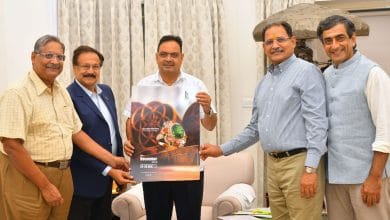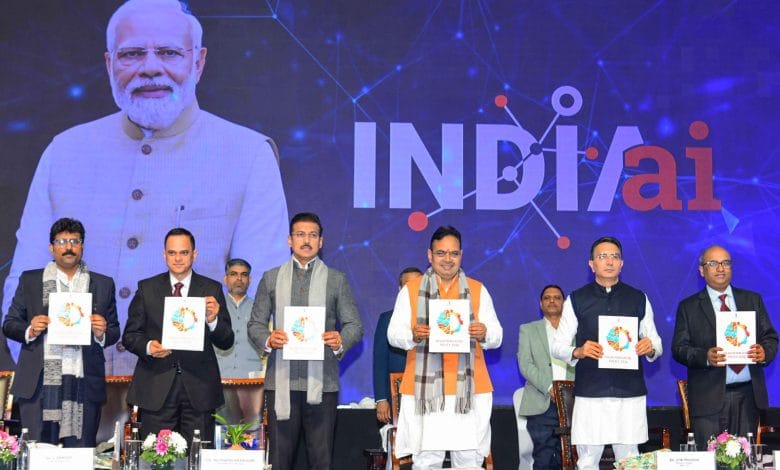
In a major step towards making Rajasthan a national leader in artificial intelligence and digital innovation, Chief Minister Bhajanlal Sharma on Tuesday launched the Rajasthan Ai-ML Policy 2026 and the National Ai Literacy Programme at the inaugural session of the Rajasthan Regional AI Impact Conference–2026, held at JECC, Jaipur. The initiatives aim to transform governance, education, skill development, startups, and research through responsible and inclusive use of artificial intelligence.
Along with these flagship launches, the Chief Minister also unveiled the iStart Learning Management System (LMS), Rajasthan AI Portal, and the Rajasthan AVGC–XR Portal, collectively designed to strengthen digital learning, entrepreneurship, and emerging technology ecosystems in the state. These initiatives are expected to accelerate innovation in sectors such as information technology, animation, gaming, extended reality, and digital public services.
Addressing the gathering, CM Bhajanlal Sharma said that effective use of technology is the foundation of future development and citizen empowerment. He emphasised that Rajasthan is moving swiftly towards becoming a hub for Ai-led innovation, investment, and good governance, in alignment with Prime Minister Narendra Modi’s Digital Indiavision.
Holographic MoU Signing Creates History
The conference witnessed a historic technological moment when three important Memorandums of Understanding (MoUs) were showcased through a 98-inch advanced holographic projection screen at JECC. The MoUs, signed earlier at Yojana Bhawan with Google, IIT Delhi, and National Law University (NLU) Jodhpur, were presented live in holographic form, marking the first such use of this technology at a government event in India. Developed by iStart-registered startup Kalens led by Rajat Jain, the innovation had earlier been seen only at global platforms such as the G20.
Rajasthan AI-ML Policy 2026: Boost for E-Governance
The Rajasthan AI-ML Policy 2026 focuses on expanding e-governance and improving public service delivery through ethical, secure, and citizen-centric use of AI and machine learning. The policy aims to make government processes faster, more transparent, and efficient, while promoting innovation-driven economic growth.
Special emphasis has been placed on data privacy, cybersecurity, transparency, and accountability. Provisions have been made to reduce algorithmic bias, ensure data protection, and maintain clarity in AI-driven decision-making. Clear mechanisms for reporting and addressing AI-related cybercrimes have also been defined. The policy includes plans to establish an Artificial Intelligence Centre of Excellence in the state.
AI Education from Schools to Colleges
Under the new policy, every government department will identify AI use-cases relevant to its domain and appoint an Ai Nodal Officer. Investments will be made in digital infrastructure, AI cloud services, secure data storage, and testing platforms.
AI education will be promoted across schools, ITIs, polytechnics, and colleges, while dedicated training programmes will be launched for youth, teachers, and government employees. Startups, MSMEs, industries, and research institutions will receive additional incentives under existing state policies to adopt AI-based solutions.
National AI Literacy Programme: AI for All
The National AI Literacy Programme has been launched to make AI accessible to the general public. Moving beyond coders and specialists, the programme enables children, students, and ordinary citizens to understand AI in a simple and practical manner. Its first phase, Yuva AI for All, offers a four-hour foundational course explaining responsible AI use in creativity, planning, and everyday life.
Strategic Partnerships with Global Institutions
Under the MoU with Google, AI/ML-based pilot projects will be implemented in healthcare, agriculture, transport, and citizen services, leveraging global best practices in cloud and AI deployment.
The collaboration with NLU Jodhpur will focus on promoting trustworthy and ethical AI through capacity building of government officials, startups, and professionals.
Meanwhile, the partnership with IIT Delhi will strengthen research, skill development, hackathons, startup mentoring, and industry-academia-government collaboration through an AI Centre of Excellence.
With these landmark initiatives, Rajasthan has taken a decisive step towards building an inclusive, secure, and future-ready Ai ecosystem, one that empowers citizens, nurtures innovation, and strengthens digital governance across the state.